Introduction:
Imagine this: You’re enjoying a serene evening on your balcony, admiring the view, when suddenly, a loud bang causes you to glance nervously at the railing. It’s an unsettling thought, but when it comes to glass railings, safety is paramount. What if the glass breaks? What are the safety risks?
As modern architecture continues to favor glass railings for their elegance and clear views, safety has become a primary concern. When it comes to glass railings, two types of safety glass dominate: Toughened glass and laminated glass. But which one is safer?
In this blog, we’ll break down the key differences between toughened glass vs laminated glass railings, compare their safety features, and help you make an informed decision about which type of glass railing is best suited for your home or building.
Toughened Glass: What Is It and Why Is It Safe?
What Is Toughened Glass?
Toughened glass, also known as tempered glass, is a type of safety glass that is created by heating the glass to a very high temperature and then cooling it rapidly. This process puts the surface of the glass into compression, making it much stronger than regular glass.
Key Features of Toughened Glass:
- Strength: Toughened glass is 4 to 5 times stronger than regular glass.
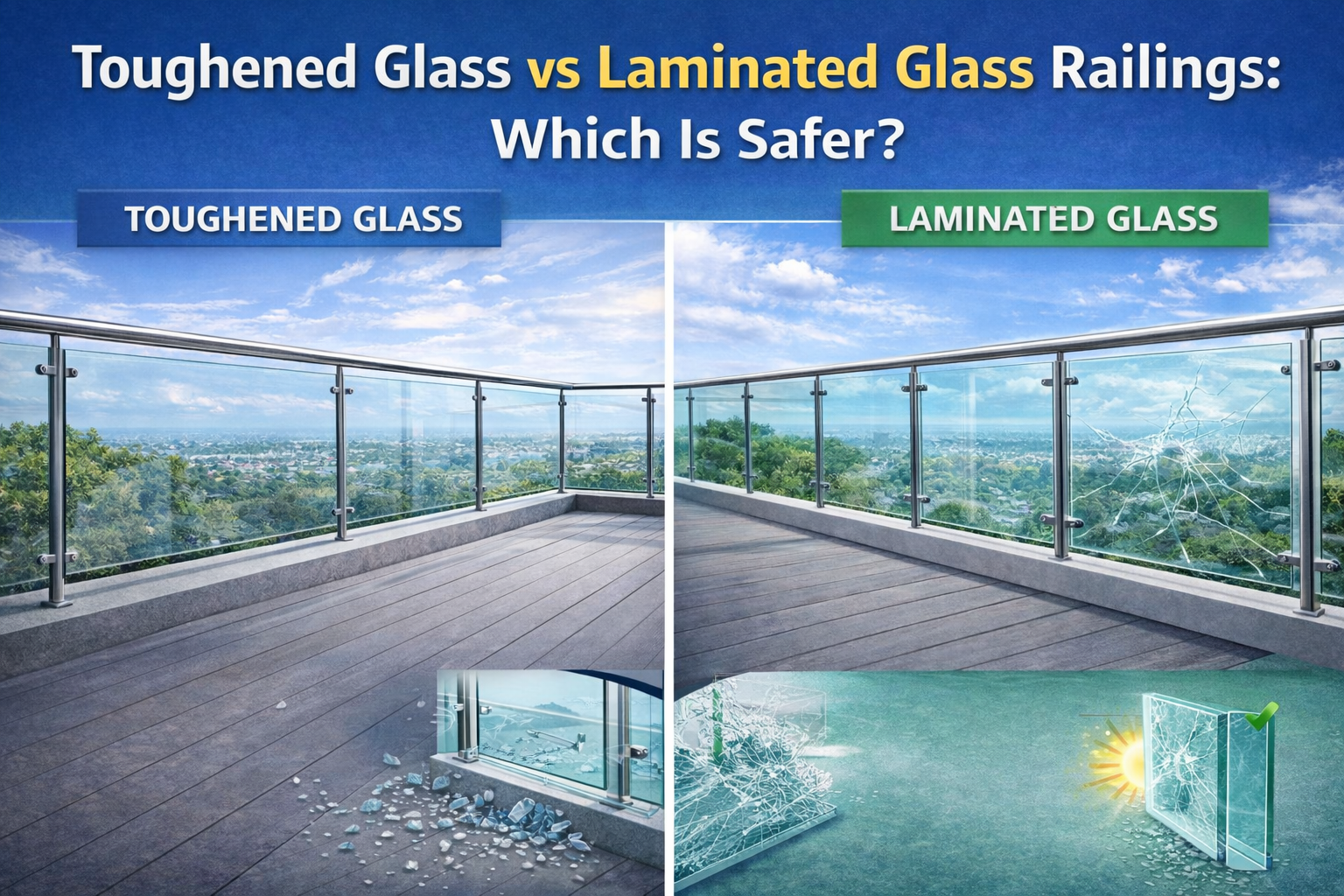
- Shatter Resistance: If toughened glass breaks, it shatters into small, blunt pieces that are less likely to cause injury.
- Temperature Resistance: Toughened glass can withstand temperature differences up to 200°C.
Safety Benefits of Toughened Glass:
Toughened glass is popular for its shatter-proof nature. If it breaks, the pieces are small, reducing the risk of serious injury. Additionally, its resistance to impact makes it a reliable option for glass railings in places that experience occasional bumps or accidental hits.
Laminated Glass: What Is It and Why Is It Safe?
What Is Laminated Glass?
Laminated glass is made by sandwiching a layer of plastic (typically polyvinyl butyral or PVB) between two or more layers of glass. This interlayer helps the glass maintain its integrity even if the glass itself breaks.
Key Features of Laminated Glass:
- Durability: Laminated glass is durable and resistant to shattering.
- Security: In case of breakage, the glass fragments are held together by the plastic interlayer.
- Sound Insulation: Laminated glass also offers excellent noise reduction properties.
- UV Protection: The plastic layer blocks UV rays, protecting interiors from sun damage.
Safety Benefits of Laminated Glass:
The biggest safety feature of laminated glass is its ability to hold the broken glass together. Even if the glass breaks, the shards remain in place due to the plastic interlayer, preventing dangerous shards from falling or scattering. This makes it especially useful for applications like railings, where safety is a priority.
Toughened Glass vs Laminated Glass: Safety Comparison
1. Impact Resistance
- Toughened Glass: Toughened glass is highly resistant to impact. However, when it does break, it shatters into small pieces that are less likely to cause injury. However, these small pieces may still pose a danger in certain situations.
- Laminated Glass: Laminated glass can withstand impacts better because the interlayer holds the pieces together even if the glass breaks. This means that the risk of sharp shards falling is greatly reduced.
Winner: Laminated Glass holds broken pieces together, making it a safer option in terms of impact resistance.
2. Shattering Behavior
- Toughened Glass: When toughened glass breaks, it shatters into small, blunt pieces, reducing the risk of injury. But once broken, it does not maintain its structure.
- Laminated Glass: In the event of breakage, laminated glass holds the glass fragments together, making it safer, especially in high-risk areas like balconies and stairs.
Winner: Laminated Glass is safer due to the interlayer that holds the glass together.
3. Safety in High-Risk Areas (Balconies, Stairs)
For areas like balconies, staircases, and other places where there’s a risk of falling or impact, laminated glass is often the safer choice. The plastic interlayer helps prevent glass fragments from falling and reduces the risk of injury.
Real-World Example: The Importance of Safety
Consider the case of a high-rise building with glass railings. If toughened glass is used and it breaks, the glass fragments could fall to the ground, posing a serious safety risk to people below. On the other hand, laminated glass would keep the glass in place, preventing falling shards.
This difference becomes even more important in high-traffic areas, where the risk of accidental impact is higher. Laminated glass provides an added layer of security, ensuring that the railing remains intact and safe.
Fire Resistance: Toughened Glass vs Laminated Glass
1. Toughened Glass
Toughened glass is generally more fire-resistant. It can withstand high temperatures without breaking. It is suitable for areas where temperature fluctuations are common.
2. Laminated Glass
Laminated glass is less fire-resistant because of the plastic interlayer. The plastic layer can soften or melt at high temperatures, which may compromise the integrity of the glass.
Winner: Toughened Glass is more fire-resistant and suitable for areas exposed to high heat.
Cost Comparison: Toughened Glass vs Laminated Glass
- Toughened Glass: Generally less expensive than laminated glass. It is more widely used in applications where cost is a key factor.
- Laminated Glass: Laminated glass is more expensive due to the additional plastic layer. However, its added safety features and durability may justify the extra cost, especially in high-risk areas.
Winner: Toughened Glass is more cost-effective.
Conclusion: Which Glass Is Safer for Railings?
After comparing the features and safety benefits of toughened glass and laminated glass, it’s clear that both offer excellent safety features, but laminated glass takes the lead in terms of preventing dangerous glass shards from falling and offering enhanced security in high-risk areas.
For high-traffic areas, balconies, and locations exposed to potential impact, laminated glass provides superior safety by holding glass fragments in place. On the other hand, if cost and fire resistance are your main concerns, toughened glass may be a better option.
Ultimately, your choice will depend on your priorities—whether that’s cost-effectiveness, impact resistance, or long-term safety.
Frequently Asked Questions (FAQs)
1. Is laminated glass more durable than toughened glass?
Laminated glass is generally more durable because it holds the shards together when it breaks. However, toughened glass is stronger in terms of impact resistance.
2. Can laminated glass be used for railings?
Yes, laminated glass is commonly used for glass railings because it offers enhanced safety by preventing falling shards and increasing overall security.
3. Does laminated glass block UV rays?
Yes, laminated glass blocks up to 99% of UV rays, making it an excellent choice for areas exposed to sunlight.
4. How does toughened glass break?
Toughened glass breaks into small, blunt pieces that are less likely to cause serious injury. The breakage is typically non-hazardous, as the pieces are not sharp.
5. Which is better for balcony railings: toughened or laminated glass?
Laminated glass is generally better for balcony railings as it provides extra safety by holding the glass pieces together even if the glass breaks.